
Germany Has the Turbines. It Is Missing the People Who Connect Them.
Germany is installing renewable energy at record pace. Solar capacity is climbing, wind expansion is accelerating, and the targets are unambiguous: 80% of electricity from renewable sources by 2030, and full climate neutrality by 2045. The panels are arriving. The turbines are going up. What is increasingly missing is something far less visible than hardware — the people qualified to connect it all to the grid.
That gap now has a name, and it is surprisingly specific. The German energy transition is not being slowed by a vague shortage of “green skills.” It is being throttled by a shortage in a handful of precise occupations, and one trade above all: the construction electrician.
A shortage you can count
The numbers are unusually concrete for a labour-market problem. The Competence Centre for Securing Skilled Workers (KOFA), part of the German Economic Institute (IW), estimates that expanding solar and wind power alone requires roughly 216,000 additional skilled workers across some 190 distinct professions, from planning and approvals through manufacturing, installation, commissioning and maintenance. Demand is rising sharply: an analysis of job postings found that energy-transition vacancies have more than doubled since 2019, with solar-related postings climbing from around 41,500 to 102,000, and the sector’s share of all national job offers rising from 1.5% to nearly 4% in five years.
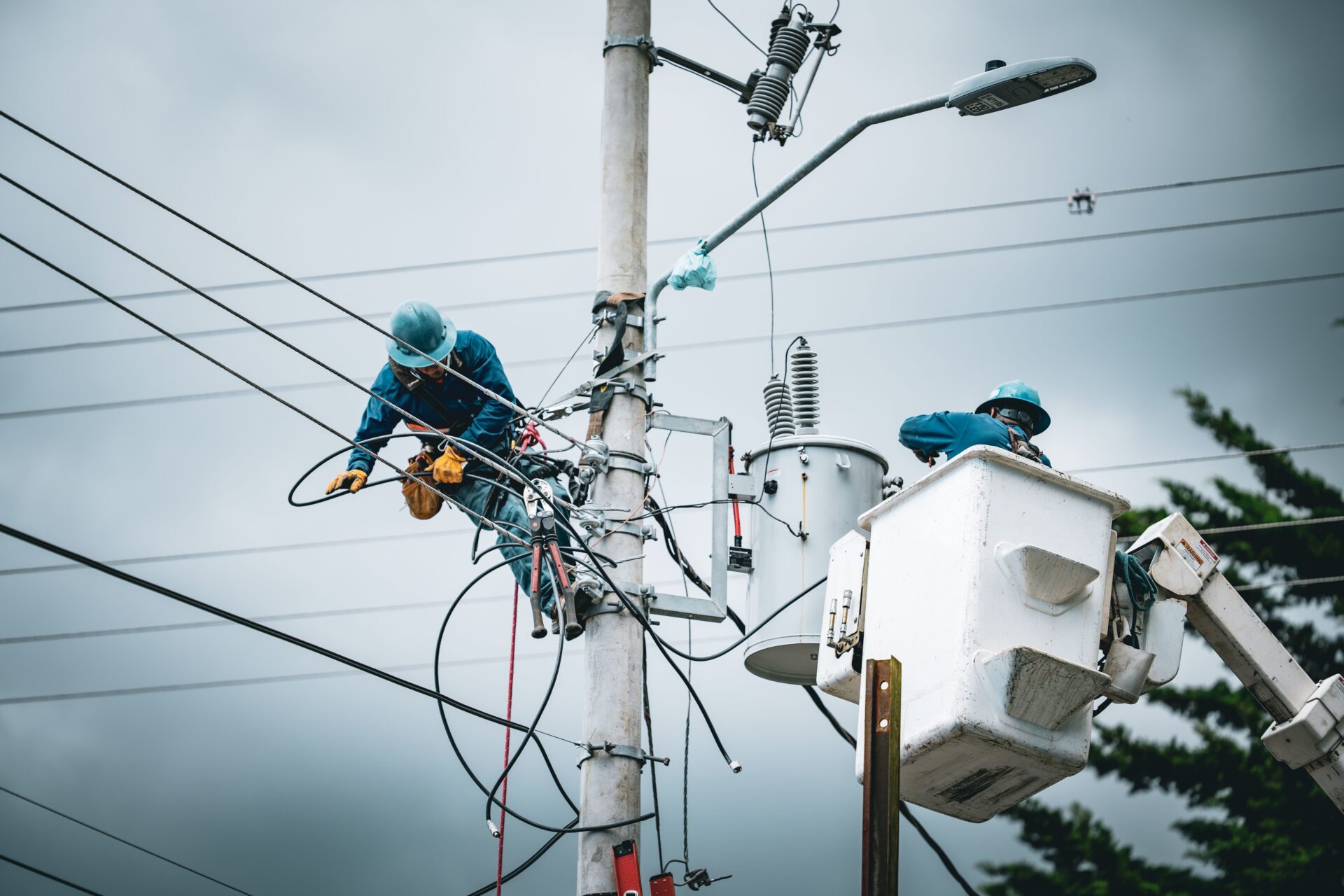
Within that picture, one occupation stands out as the bottleneck. Construction electricians are among the most acutely short. These are the workers who physically install and maintain solar and wind systems, build charging infrastructure, and connect renewables into the power grid. More than 18,000 positions in building electrical engineering remained unfilled in 2024, and the figure is still rising rather than easing. These are not peripheral roles. They are the point at which a renewable project stops being a plan and becomes electricity. When the electricians are missing, the panels wait.
This is the part of the transition that money and technology cannot fix on their own. Germany can fund the hardware and set the targets, but it cannot conjure qualified installers on the same timeline.
A world-class system, built for a slower world
Here lies the German paradox. The country has arguably the most admired vocational training system in the world. Its dual system pairs classroom learning with paid, in-company apprenticeship across 328 state-recognised training occupations, each governed by nationally standardised regulations and lasting between two-and-a-half and three-and-a-half years. The results speak for themselves: youth unemployment in Germany has run far below the EU average, in large part because this system moves young people smoothly from education into skilled work.
But the features that make a German qualification trusted are also what make it slow. Its depth, its length, and its rigorous standardisation cannot respond quickly to a sudden, occupation-specific surge in demand. You cannot apprentice your way out of an 18,000-person electrician gap on a 2030 deadline. The transition does not only need new entrants trained over three years; it needs experienced workers from adjacent and declining trades retrained into renewable-ready roles in months, not years. The dual system was built for durability. The energy transition is asking it for speed. That is not a flaw in the system. It is a mismatch between an excellent instrument and an urgent, narrow task.
The targeted instrument Germany is already reaching for
This is precisely where micro-credentials enter, and Germany is better prepared for them than it sometimes realises. The country already has a domestic precedent in Teilqualifikationen, the partial qualifications that break a full occupation into five to seven self-contained modules. Each module lasts three to six months and ends in a formal competence assessment and a chamber-issued certificate. They are aimed at adults over 25 who have practical experience but no usable formal qualification, and they stack: complete the full set, and a candidate can sit the final examination for the recognised occupation itself. In other words, Germany has already designed a way to certify skills in trusted, modular pieces without abandoning the depth that makes its credentials credible.
The momentum is recent and real. In December 2025, the main committee of the Federal Institute for Vocational Education and Training (BIBB) adopted a recommendation to standardise how partial qualifications are designed and delivered, directly addressing the transparency and portability gaps that had limited their reach. In the same month, BIBB hosted the European Micro Credential Days to examine their role in vocational training, building on the EU Council Recommendation on a European approach to micro-credentials adopted in June 2022.
This is the space the MiCRET project, Micro-Credentials for Renewable Energy Training, is built for. MiCRET is not producing generic short courses. It is testing whether a micro-credential can be aimed precisely at the bottleneck: giving an experienced electrician the specific renewable-energy and grid-integration competences the transition demands, in a format short enough to fit around a working life and standardised enough to be trusted by an employer. It treats the skills gap not as a wall to be scaled with another three-year qualification, but as a set of specific, nameable gaps to be filled, one verified module at a time.
References:
Cedefop & ReferNet. (2023). Spotlight on VET: Germany. https://www.refernet.de/dokumente/pdf/2023_SP_DE.pdf
Clean Energy Wire. (n.d.). Electricians, engineers most needed professions for German energy transition workforce – analysis. https://www.cleanenergywire.org/news/electricians-engineers-most-needed-professions-german-energy-transition-workforce-analysis
Clean Energy Wire. (2022, November 28). Shortage of more than 200,000 skilled workers for implementing Germany’s energy transition – report. https://www.cleanenergywire.org/news/shortage-more-200000-skilled-workers-implementing-germanys-energy-transition-report
Deutschland.de. (2025, January 27). How Germany’s dual vocational training system works. https://www.deutschland.de/en/topic/business/how-germanys-dual-vocational-training-system-works
European Commission. (n.d.). A European approach to micro-credentials. European Education Area. https://education.ec.europa.eu/education-levels/higher-education/micro-credentials
Federal Institute for Vocational Education and Training. (n.d.). Teilqualifikationen. https://www.bibb.de/de/220526.php
Federal Institute for Vocational Education and Training. (2025, November 10). European Micro Credential Days. https://www.bibb.de/en/214206.php
Federal Ministry of Education and Research. (2025, January 9). Teilqualifikationen. https://www.bmbf.de/DE/Bildung/Ausbildung/Teilqualifikationen/teilqualifikationen.html
German Council on Foreign Relations. (2025, November). Green-skilled workers for the future: How Germany can strategically secure skilled labor (Policy Brief No. 19). https://dgap.org/en/research/publications/green-skilled-workers-future
Reuters. (2025, March 6). Germany’s green jobs double but staff shortage threatens growth, study shows. https://www.reuters.com/world/europe/germanys-green-jobs-double-staff-shortage-threatens-growth-study-shows-2025-03-06
Signite Experts. (2025, April 29). Energy transition in Germany slowed down: Shortage of skilled workers. https://signite-experts.com/en/news/energy-transition-in-germany-slowed-down-shortage-of-skilled-workers/