
Italy’s Renewable Energy Communities (CERs) are growing rapidly. The national CERMAP database, developed by RSE, now counts 1,629 registered CERs across the country, with Liguria leading both in absolute numbers and per capita density. The regulatory framework has accelerated rapidly: from the transposition of the EU RED II Directive in December 2021 to the Ministry of Environment decree of July 2025, the institutional scaffolding is now far more robust.
Yet the metrics used to judge this success remain one-dimensional: regulators, investors and most public dashboards track kilowatt-hours produced, euros saved on energy bills and tonnes of CO₂ avoided. These are vital figures, but they capture only the perspective of the energy benefit generated, ignoring an undercurrent of social cohesion, inclusion and local resilience that remains largely invisible. The lack of standardised KPIs for social capital does not diminish its incredible added value, but makes it all the more urgent to translate it into evidence, because without a shared narrative it risks being excluded from the logics of financing and replication.
Baranzate, on the north-western periphery of Milan, is the poorest municipality in the Metropolitan City. Here the top 10% of citizens have a per capita income of €43,500 per year, while the bottom 10% stop at €8,300. The municipality records the lowest per capita income in the metropolitan area (€11,700 against an average of €26,100) and the highest percentage of resident foreign nationals: 36%, with one in three born elsewhere.
It is in this context that in 2010 Father Paolo Stefano, parish priest of Sant’Arialdo from 2004 to 2021, launched a community project by founding the La Rotonda Association, with the aim of building the capacity of the surrounding territory through the creation of services and spaces where vulnerable people could not only find answers to their needs, but above all encounter opportunities for growth and fresh starts. The watchword of the community model is condividi, risorse si diventa — share, and through resources you become. From 2010 to today, La Rotonda has inaugurated a way of working that can be defined as “human capitalism”: adults, families, the elderly, NEET youth do not merely receive services, but become protagonists in a path of growth and autonomy. In this logic, La Rotonda has regenerated and repurposed over 7 disused spaces in the municipality of Baranzate: a community cannot grow if it does not find places capable of acting as an enabling environment. In this logic, in 2024 the solidarity renewable energy community named SOL — Solari e Solidali ETS was inaugurated: not a simple sharing of energy, but energy that becomes a generator of resources for the community.
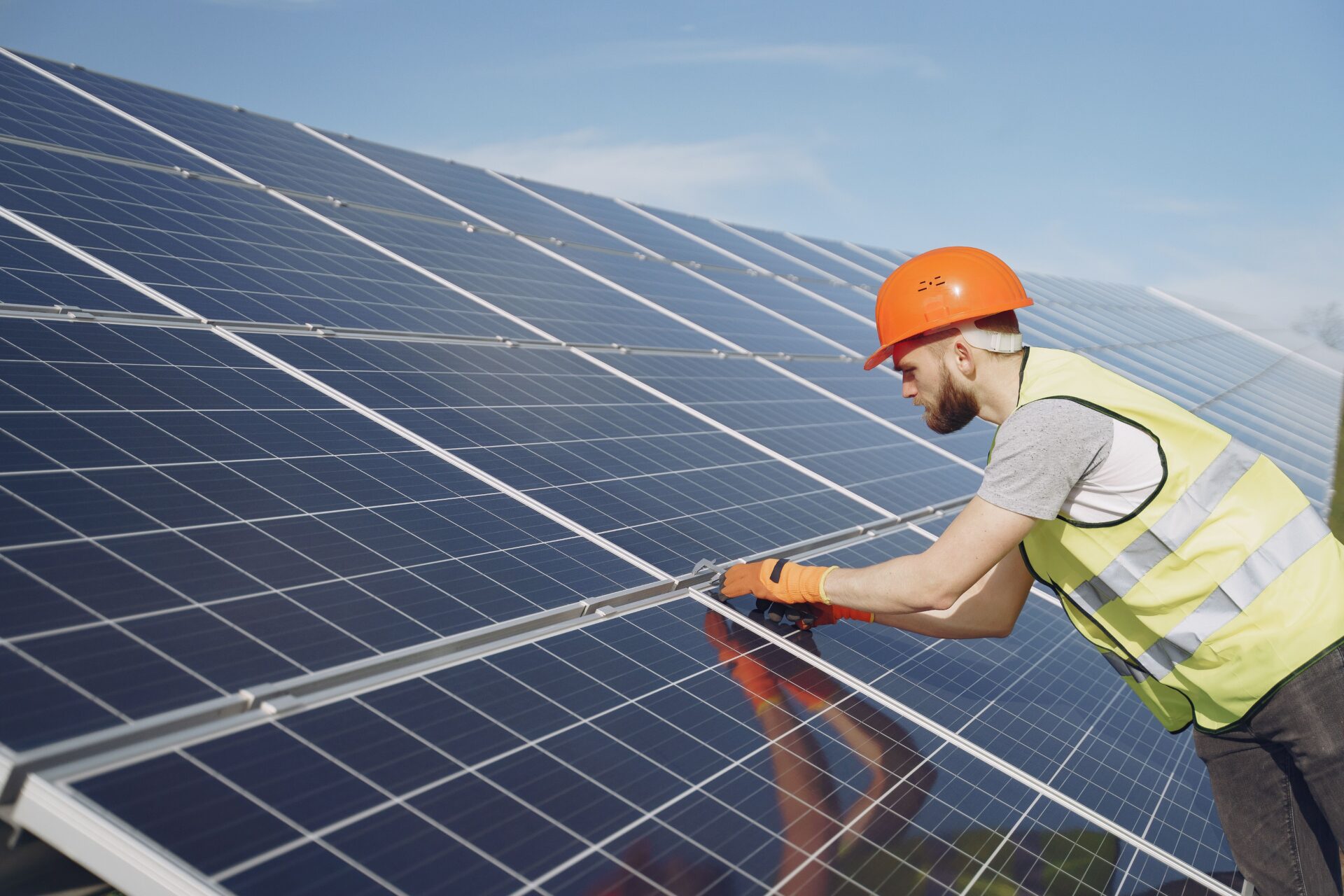
The energy community can benefit in the first instance from two photovoltaic plants: the largest installed on the headquarters of the Fondazione La Rotonda, with an output of 89 kW; the second installed on the premises of the after-school centre for adolescents, with an output of 25 kW. The members of SOL ETS are residents of Baranzate who choose to join the Association free of charge and open themselves to energy volunteering: they commit to consuming more energy when the plants are at peak production. In this way, this virtuous energy consumption pattern generates an incentive that is not distributed among the members themselves, but becomes an integral part of the economic support available to the families in poverty supported by La Rotonda. A system therefore capable, through the sun, of producing multiple benefits and of building the capacity of the community itself.
The real innovation lies in the way the energy generated feeds a broader ecosystem and brings together the stories of citizens with different incomes, all united in the purpose of building a community that can overcome inequalities. As Samantha Lentini recalls, drawing on Alberto Felice De Toni, “innovation is a disobedience that turned out well”: a constructive refusal to abandon the territory.
To translate this value into a shared narrative and make it evident, RSE — in collaboration with TRIADI (Politecnico di Milano) — has developed the first structured Italian methodology for the Social Impact Assessment (VIS) of CERs: a framework being implemented in the 2025–2027 triennium and tested on a representative sample of 10 CERs nationwide.
The methodology operates on three analytical levels:
- Macro (normative): tracks alignment with policy objectives and socio-territorial impact. Key indicators: the Energy Poverty Indicator (PE10), the Thermal Discomfort Index (IDT) and the Energy Poverty Reduction Rate (TRPE).
- Meso (managerial): evaluates governance, financial performance and stakeholder engagement. Key indicators: the Active Participation Rate in Production (TPAP), the Support Coverage Rate for vulnerable households (TCS) and the Stakeholder Response Indicators (IRS).
- Micro (community): examines internal dynamics — inclusivity, cohesion, conflict resolution. Key indicators: the Community Cohesion Indicator (ICC), Support for Disadvantaged Groups (ISFS) and the Energy Inclusivity Indicator (IE).
In total, 20 synthetic indicators map what we can define as the “multidimensional nature of CERs”: the approach treats every energy community as a living organism that evolves over time, requiring evidence-based decisions rather than intuition alone. The goal is not simply to quantify results, but to understand the mechanisms that generate change: participation, quality of governance, capacity to build social value alongside electrons.
The concept is not uniquely Italian. Under the EU RED II Directive, Renewable Energy Communities (RECs) and Citizen Energy Communities (CECs) exist across Europe. In Belgium, Klimaan has installed photovoltaics on 197 social housing units with stable pricing and electric car-sharing. In the Netherlands, Wattnu channels all benefits directly to social housing tenants. In the United Kingdom, Repowering London has developed retrofitting toolkits for apartment blocks. [Housing Europe / REScoop, 2024]
Yet even in these pioneering cases, social impact is rarely included in the business model. As European housing cooperatives note, energy markets still do not value social inclusion; those who actively pursue it find no economic recognition, making the model less competitive and leaving vulnerable families on the margins despite the long-term benefits of savings, empowerment and energy security. The Italian methodology, by building a rigorous measurement framework, offers a potential path to make the generated value visible, replicable and consequently financeable.
The bottleneck, in fact, is no longer technology or regulation but once again a question of literacy. Those who manage a CER today know how to read production data, inverter performance and net metering balances, but reading the social ledger requires different skills: mapping stakeholders and vulnerable groups, applying a structured VIS methodology (macro/meso/micro), interpreting indicators such as TCS (support coverage for vulnerable households) or PDFS (direct participation of disadvantaged groups), communicating value generated beyond bill savings, navigating between participatory governance, financial sustainability and social inclusion.
These skills do not yet exist in standard renewable energy curricula, but sit at the intersection of energy engineering, social policy, urban planning and community development.
The MiCRET project (Micro-Credentials for Renewable Energy Training) is carrying out a skills mapping exercise in the renewable energy sector, with the consequent development of micro-qualifications targeted at training the clean energy workforce. Alongside technical modules, an interesting space is opening up: the training of professionals capable of operating on both dimensions, the technical and the social.
Drawing on the RSE methodology and cases like La Rotonda, MiCRET explores micro-credentials as a means to create a shared, enabling literacy in:
- Social Impact Assessment for Energy Communities
- Participatory Governance and Stakeholder Engagement in Local Energy Initiatives
- Energy Poverty Alleviation through Community-Based Renewable Projects
The goal is to provide community energy managers with the basic tools to do what current training almost always omits: demonstrating that the project generated not only kilowatt-hours and economic return, but also cohesion, inclusion and territorial resilience, in a phase of ecological transition in which the capacity to generate and measure social capital constitutes a strategic asset that can no longer be postponed.
The CERMAP database counts 1,629 registered energy communities in Italy. If each of them generates even a fraction of the social value documented in Baranzate, the hidden dividend of the national system is of a higher order. But to sustain it, a cohort of professionals is needed who can read and enhance both ledgers — the electrical and the social — and translate the latter into evidence for financiers, regulators and recipient communities.
Training can no longer deal only with the former. Micro-credentials, in this sense, are not just an addition to the energy curriculum, but can become the tool that allows the social value generated to emerge and become replicable.
Sources
- D. Clio, I. Galbiati, Non solo kilowattora: misurare l’impatto sociale delle CER, Nuova Energia, 2025. [Ricerca di Sistema Elettrico, RSE]
- P. Sesti, L’innovazione? È una disobbedienza andata a buon fine, intervista a S. Lentini, Nuova Energia, 2025, pp. 112-117.
- RSE, CERMAP — Mappa interattiva delle Comunità Energetiche Rinnovabili in Italia, database nazionale. Link
- Housing Europe / REScoop, Energy Communities and Social Housing, 2024. Link
- Commissione Europea, Direttiva (UE) 2018/2001 (RED II) — Quadro per le Comunità Energetiche Rinnovabili.
- Unioncamere-Ministero del Lavoro, Le competenze green, Excelsior 2025. Link
- EUREC, Renewable Energy Skills Partnership: New Policy Statement on Micro-Credentials and Certification, settembre 2025. Link